
The first hour after a tree comes down
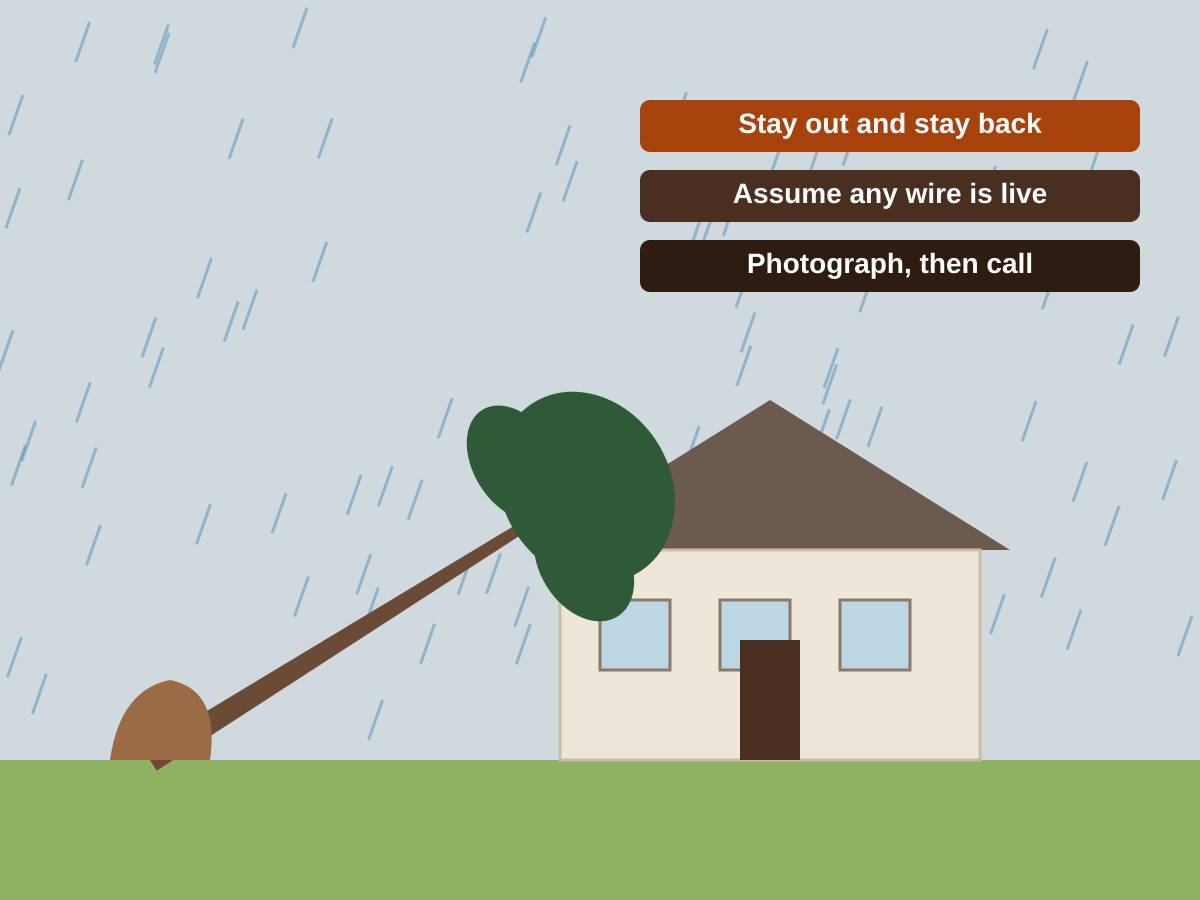
- Get people clear. Everyone out of any room under the tree, and nobody standing under hanging limbs, which arborists call "widowmakers" for good reason.
- Treat every wire as live. Downed lines can be energized even when the power is out at your house. Report them to your electric utility (the number is on your bill) or call 911, and keep a wide distance. Who handles trees on power lines explains the split.
- Shut off what you need to. If a limb came through the roof and water is getting in, shut off electricity to that part of the house only if you can reach the panel safely and dry. If you smell gas, leave and call the gas company from outside.
- Photograph everything before anything is moved: the tree, where it broke or uprooted, the roof, the ceilings, the car, the fence.
- Call your insurer to open a claim, then a tree pro. Ask the insurer whether they want an adjuster to see the tree in place, unless leaving it would cause more damage.
The full walk-through, including what to say to the adjuster, is in a tree fell on your house in South Carolina: what to do first.
What storm tree work involves
Storm cleanup is harder and riskier than a planned removal. The tree didn't fall where anyone chose, the wood is under tension, and the house underneath is already damaged.
Trees on roofs
The pro's goal is to take the weight off the house without letting it shift and do more damage. That usually means rigging the tree from above, cutting it into pieces that are lifted or lowered away, and sometimes bringing in a crane that can pick the trunk straight up. Once the tree is off, the hole needs a tarp to keep rain out until the roofer arrives, so ask the pro whether they tarp or whether you should line up a roofer.
Hung-up and split trees
A tree leaning into another tree, or a split trunk still attached at the base, can let go without warning. These are cut from a safe position, often with the help of a bucket truck, and never by someone standing underneath.
Uprooted trees and root plates
When a big oak or pine tips over in soaked ground, the root plate stands up like a wall of dirt. Once the trunk is cut free, that plate can drop back into the hole with great force. Pros cut in a set order for this reason. The hole and the root plate are handled afterward, with stump grinding or by setting the plate back and filling.
Trees across driveways and fences
These are usually the simplest storm jobs, but they come with their own traps: a pine lying across a chain-link fence can spring up when the fence is released. A fallen tree blocking the only way out of a property is usually a high priority.
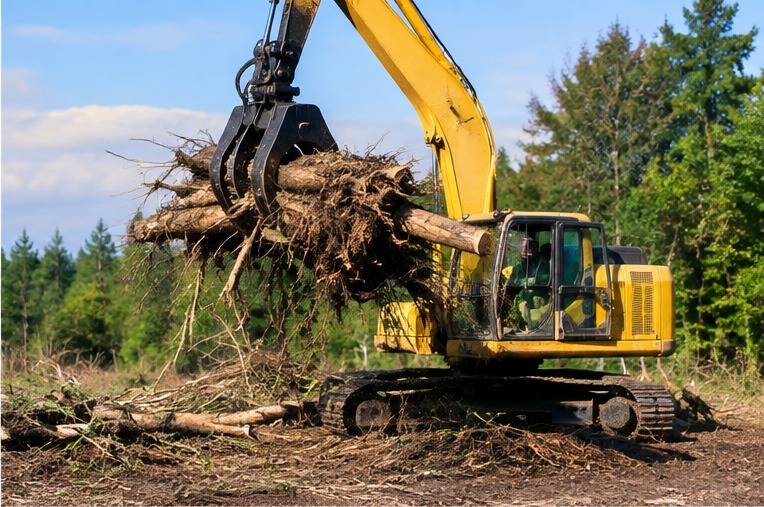
For big jobs, loaders or grapples move heavy trunks and brush that would take a crew days to carry by hand. Whether that equipment is used depends on the size of the job and what your yard can take.
Storms that bring trees down around Lexington
- Summer thunderstorms. Short, intense downbursts can flatten a stand of pines on one street and leave the next untouched. They are the most common cause of single-tree calls.
- Tropical systems. Hurricanes weaken over land but still bring hours of wind on soaked ground, which is when shallow-rooted trees tip over. The remnants of Hurricane Helene in 2024 were a recent reminder, bringing down trees and power lines across the Midlands.
- Ice. Freezing rain loads branches until they break. Ice storms are less common here than wind, but Bradford pears, water oaks and pines with dense crowns suffer most when one comes through.
- Lightning. A pine struck by lightning may look fine for weeks, then fade and die as beetles move in. See dead and dying tree removal.
Before the next storm
The least expensive storm damage is the damage that never happens. Once hurricane season starts in June, walk around your trees:
- Look for dead limbs over the roof, the driveway and where cars park. Those can usually be removed with trimming.
- Look for trees with a new lean, cracks, mushrooms at the base or soil heaving. The tree risk checklist walks through each sign.
- Look at dead pines anywhere they could reach the house. They are usually the first to break.
- Keep your insurer's claim number and a tree pro's number in your phone. Ours is (803) 784‑3426.
Price after a storm
Storm work usually costs more than a planned removal of the same tree: the wood is unpredictable, more rigging is needed, cranes may be involved, and the work is often urgent. That doesn't mean anything goes. Get a written estimate before work starts where you safely can, make sure it covers what happens to the wood and the brush, and don't sign over your insurance payment to anyone. The cost guide explains the ranges.
Watch out for storm chasers
After a big storm, trucks from out of state knock on doors. Some are fine; some take a deposit and disappear. Be wary of anyone who demands large cash payments up front, can't give you a local address or reference you can check, or pushes you to sign an assignment of benefits for your insurance claim on the spot. If something feels off, the South Carolina Department of Consumer Affairs is a place to ask.