
Why trees die in Lexington County yards
Bark beetles in loblolly pines
The southern pine beetle is one of the most destructive forest insects in the South, and the SC Forestry Commission is a good source of information on it. Along with Ips engraver beetles and black turpentine beetles, it attacks pines that are already stressed. In a yard, that stress usually comes from:
- Drought, especially in the sandy soils of the southern county, where water drains away quickly.
- Construction damage: roots cut for a driveway, patio, pool or new house, or soil piled over the roots. Many Lexington subdivisions were built around existing pines, and this kind of damage can take years to show.
- Lightning strikes, which are common on the tallest pine in a yard.
- Storm damage that snaps tops or tears roots.
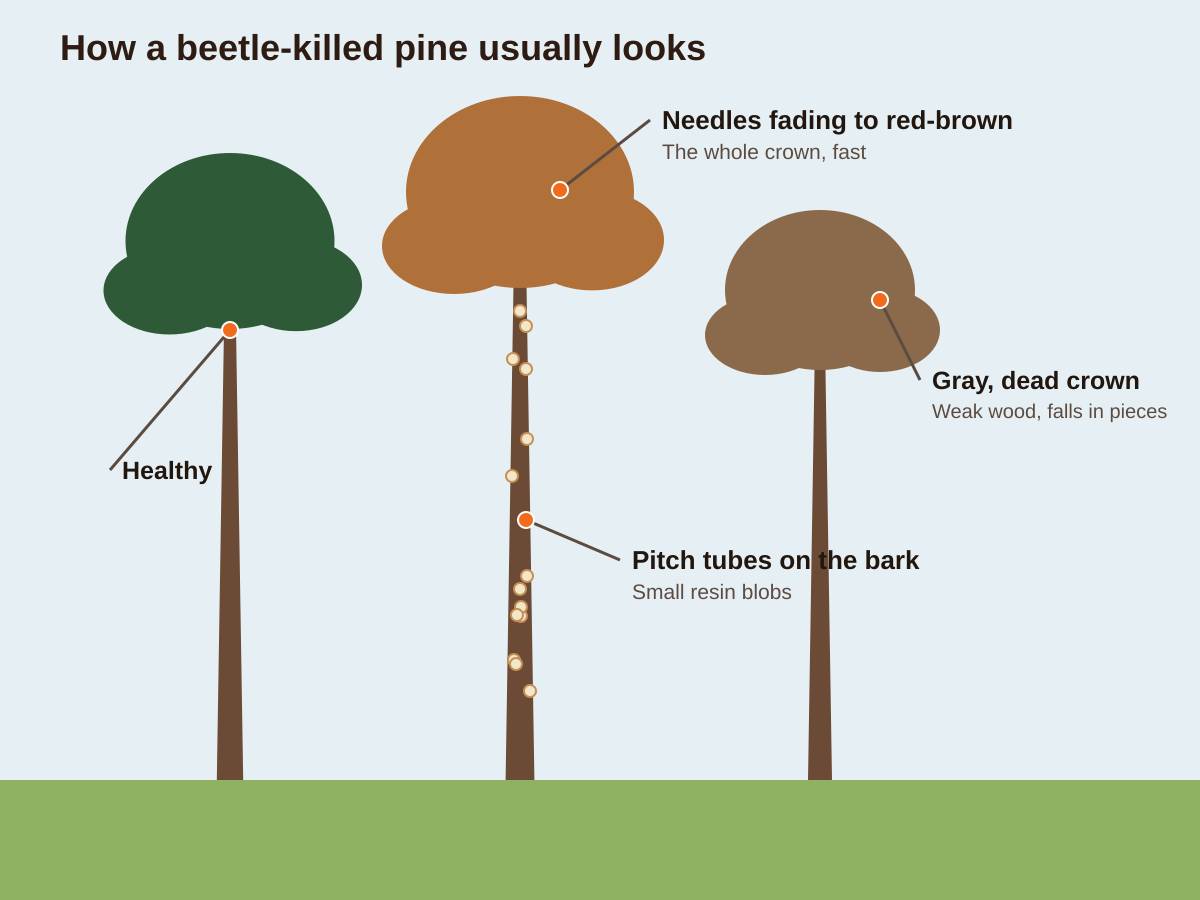
Once beetles win, the crown fades from green to yellow to red-brown, often quickly in warm weather. Look on the bark for small blobs of resin (pitch tubes) and fine reddish sawdust in bark crevices and at the base.
Decay in water and laurel oaks
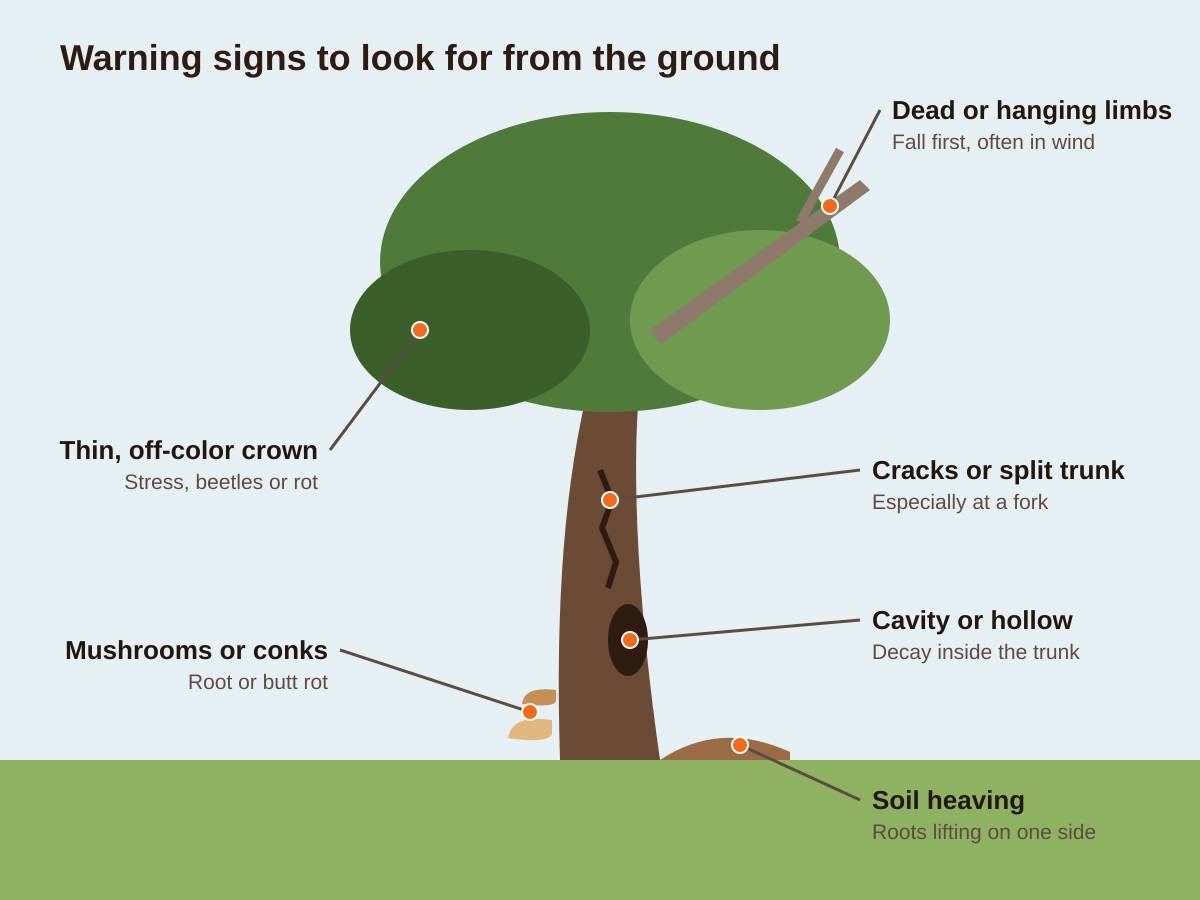
These fast-growing oaks were planted widely as shade trees, and they tend to decline sooner than slower-growing oaks. Decay often starts at old pruning wounds or in the roots and works through the heartwood. The crown can stay green for years while the trunk hollows out. Signs include large dead limbs, fungus on the trunk or roots, cavities and oozing wounds.
Root problems
Trees on lots where the grade was changed, where heavy equipment compacted the soil, or where roots sit in waterlogged clay can decline slowly from the bottom up. Thinning crowns, small leaves and dieback at the top of the tree are common symptoms.
Old age and storm injury
Bradford pears, older sweetgums and big pecans eventually shed limbs faster than they grow them. A tree that lost a third of its crown in a storm often never recovers.
How to tell if a tree is dead or just stressed
- Pines: green needles only at the very tips, or none, means trouble. A pine with a full brown crown is dead, even if the bark still looks fine.
- Hardwoods: in the growing season, look for branches with no leaves while the rest of the tree has leafed out. In winter, scratch a small twig with a fingernail: green underneath is alive; brown and dry is not.
- Bark: bark sloughing off in sheets, woodpecker activity all over the trunk, or sawdust at the base all point to a dying or dead tree.
- Base and roots: mushrooms, conks, cracks in the soil or a new lean mean the anchor may be failing.
Walk through the full tree risk checklist for Lexington County, which also rates how urgent each sign is.
Why dead trees cost more to remove the longer they stand
Climbers rely on the tree to hold them and their rigging. A freshly dead pine is still strong. After a year or two of rot, its top and limbs can snap under a climber's weight or when a rope loads them. That pushes the job toward a bucket truck or a crane, and when neither can reach, toward slow, careful work from the ground. Dead wood also breaks unpredictably when it is cut. Taking a dead tree down early is almost always cheaper and safer.
How a dead tree near a house comes down
- Assessment of how sound the wood is, where it can land, and how equipment can reach it.
- Deciding the method: felling in one piece where there is room, sectioning from a bucket truck, climbing only if the wood is sound enough, or a crane pick for big trees over roofs.
- Protecting the ground: mats or plywood on lawns, and careful lowering of wood near patios, pools and septic systems.
- Cleanup: chipping brush, cutting or hauling logs, and raking the site. Beetle-infested pine wood should not be stacked for firewood next to living pines.
- The stump: cut low and ground if you want. See stump grinding.
Dead trees near wires, fences and property lines
If a dead tree could reach an overhead line, tell the pro and your electric provider. Utilities generally deal with trees that threaten their main lines, but the line to your house and trees away from the utility's lines can be handled differently, so ask yours. Read trees near power lines in Lexington County.
If the dead tree is on your neighbor's side and could fall on your house, a polite written note with photos is a good first step. The question of who pays if it does fall is covered in a tree fell on your house in South Carolina.
What affects the cost
Height, condition of the wood, what is underneath and how equipment can reach the tree matter most. Dead trees that can't be climbed and need a crane are at the top of the range. See the Lexington tree removal cost guide for typical ranges, or request a free estimate.
Questions to ask before you hire
- Is the wood sound enough to climb, or will you use a bucket truck or crane?
- What is the plan for the drop zone near the house, fence or septic tank?
- Is hauling the wood and brush included, and what about the stump?
- Do the nearby pines show any signs of beetles?
- Can you show proof of liability and workers' compensation coverage? Check it yourself.